• Home
  • About
  • Judicial Development Corner
  • Blog
    • Professional legal blog
    • Student legal blog
    • E-Journal
  • Contact Us
  • Related Links
  • Be EnGayged Mooting Competition
    • Be EnGayged Mooting Competition 2025
    • Be EnGayged Mooting Competition 2024
    • Be EnGayged Mooting Competition 2023
    • Be EnGayged Mooting Competition 2022
    • Be EnGayged Mooting Competition 2021
  • 中文版網頁
    • 主頁
    • 關於我們
    • 聯絡我們
    • 相關連結

Welcome to the
Student Legal Blog

.Read articles written by students from the University of Hong Kong on LGBT+ rights recognition and development in Hong Kong, sharing their opinions and endeavor to the elimination of social injustice.

RSS Feed

The Potential for Anti-Hate Speech Legislation Protecting LGTBQ+ People in Hong Kong

19/6/2022

0 Comments

 
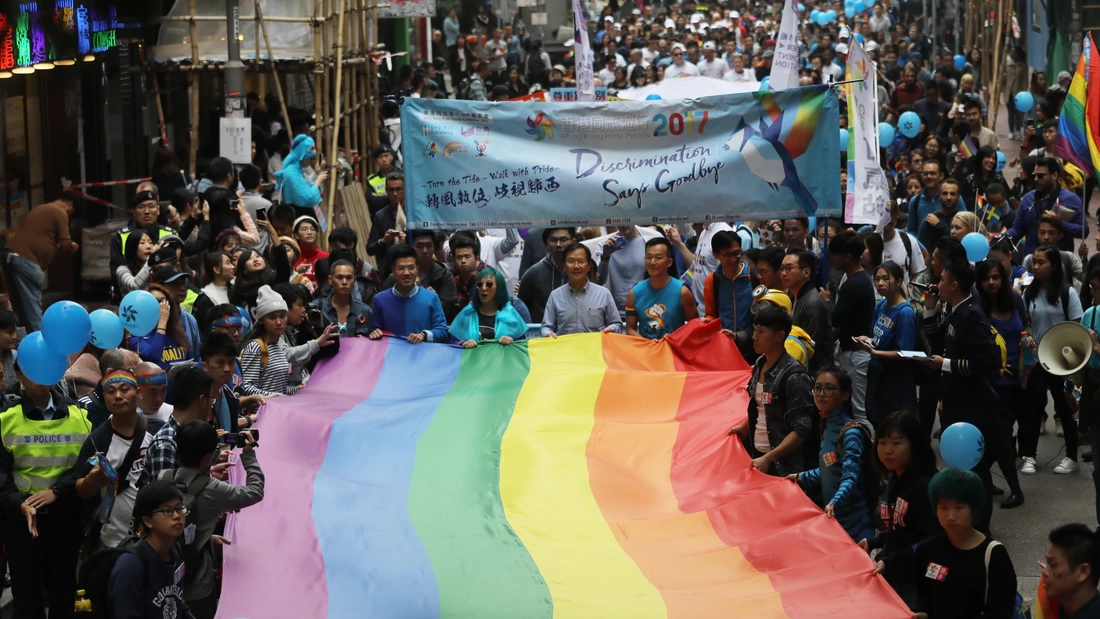
Picture
Image Source: SCMP Anti-gay feelings still linger in Hong Kong, as hate speech on viral Facebook video revealed | South China Morning Post (scmp.com)
Clara Philippi

Clara Philippi graduated from the LLM Human Rights programme at HKU in 2022. 

Brief Summary:
Hate speech against LGBTQ+ persons is a prevalent and tangible issue in Hong Kong. Regardless, there is no explicit anti-hate speech legislation protecting queer Hongkongers from such speech. This article draws comparisons to the racial hate speech provisions enshrined in the RDO and protected by the Equal Opportunities Commission to highlight why simply expanding current hate-speech legislation practices to the LGBTQ+ context could result in less than ideal protection, due to well-documented shortcomings in the EOC’s work against hate speech. 

On June 15, 2021, Chief Executive of the HKSAR, Carrie Lam, addressed recent controversial  comments made by members of the LegCo in regards to the postponement of the 2021 Gay Games. She remarked that she understood the inclusive nature of the event and had “no problem with that sort of spirit” [1]. She also expressed regret over the fact the council members had “become a bit emotional in expressing their view” while discussing the LGBTQ+ event [1]. She concluded by stating that “I certainly, personally and as Chief Executive, do not condone that sort of remarks by individuals which will unnecessarily divide society and even raise hatred among certain sectors in the community” [1].
However, despite Lam’s apparent opposition towards online hate speech, it continues to be a prevalent issue in Hong Kong, especially when leveraged against the LGBT+ community. Lam has the ability to raise this issue with Hong Kong’s legislative body through the issuance of a Government Bill, for instance, yet anti-hate speech legislation for the LGBTQ+ community has not come up on Hong Kong’s political radar. The Chairperson of the Equal Opportunities Commission (EOC), Ricky Chu Man-kin, even stated that the very body tasked with ensuring equal treatment of minorities should remain neutral on LGBTQ+ issues to appease both sides of the political spectrum [2].
The following article will explore the possibility of anti-hate speech legislation protecting LGTBQ+ people being enacted in Hong Kong and hypothesize what such legislation might look like in the Hong Kong legislative context. 
Anti-LGBTQ+ hate speech refers to the incitement of hatred, violence, or discrimination motivated by prejudice against someone based on their sexual orientation or gender identity. Hate speech has wide-reaching short- and long-term effects on its victims, including, but not limited to, emotional distress, anger, loneliness, fear, eroding social trust, shame, anxiety, depression, and suicidal thoughts [3]. This is especially pertinent to members of the LGBTQ+ community, who are already at a heightened risk of developing mental illness and social isolation [3]. Anti-hate speech legislation targeted towards the protection of LGBTQ+ people is not a novel idea. Among others, 12 European Union member states have already criminalized such acts [4].     
    In Hong Kong, legislation concerning hate speech is contained only in Race Discrimination Ordinance sections 46 and 47 and Disability Discrimination Ordinance (DDO) sections 45 and 46. In these pieces of legislation, hate speech is referred to as ‘vilification’. If one believes that one's right to be free of vilification has been breached, the Discrimination Ordinances empower the EOC to investigate such claims. While thousands of such complaints have been filed with the EOC, only a handful of cases have been litigated before a court. This is due to the EOC’s strong focus on confidential conciliation. Conciliation was prioritized as it appeals to the business community in HK and aligns with free-market economic policies. While the EOC is empowered to provide litigation assistance, it has a statutory obligation to attempt conciliation first. Once conciliation fails, applicants are free to apply for litigation assistance. However, a comprehensive study of DDO complaints showed that out of 451 cases brought to the EOC, only 2 were moving towards litigation [5]. Thus, applicants are highly encouraged to accept offers during the conciliation phase, possibly due to their awareness of  slim chances for free litigation assistance by the EOC and inability to afford private representation. Conversely, respondents feel no pressure to cooperate, as they also know that litigation is unlikely. Civil society organizations have thus described the EOC model as one “that allows but discourages litigation” [5]. 

Complainants also commonly drop out of the process, as it is very time and energy-intensive to make their case and they believe the remedy they would ultimately receive might not be worth that effort. Individuals representing complainants under the DDO have described the EOC as “lacking genuine commitment to equality” and not supporting them adequately [5]. Civil society organizations and the EOC also have a strained relationship. Members of the EOC have complained about local NGOs being too radical and unwilling to compromise, while the NGOs want the EOC to be more active and prioritize justice. 
Lastly, cases conciliated under the EOC might not achieve the same public and systematic impact as those heard in front of a court, as they are less likely to be reported on. As LGBTQ+ issues in Hong Kong are still a developing area of law, civil society engagement with such cases is crucial, both for public opinion development and to provide the necessary public pressure to enact meaningful reforms. 
    Given the current political non-priority assigned to many LGTBQ+ issues in Hong Kong, it is highly unlikely that a standalone piece of anti-LGBTQ+ hate speech legislation will be enacted any time soon. Given the fact that all hate speech-adjacent provisions in Hong Kong are enshrined in greater overall anti-discrimination ordinances, it is more likely that we will need to wait for the enactment of an LGBTQ+ Discrimination Ordinance and its vilification provisions. Whether these would be sufficient to address the intense amount of hate speech faced by members of the LGBTQ+ community is up for discussion, as the effectiveness of the EOC in providing redress for rights violations has been widely criticized. In fact, some local activists have actually called the EOC a barrier to access to necessary litigation. An LGBTQ+ Discrimination Ordinance might be progressive for Hong Kong, but if the rights enshrined therein cannot be effectively enforced, that progressiveness is rendered void. 


[1] Hate speech not accepted: CE. (2021, June 15). News.gov.hk. https://www.news.gov.hk/eng/2021/06/20210615/20210615_102855_317.html Accessed 24.10.21
[2] Ng, K.C (2019, April 12). New chief of Hong Kong’s Equal Opportunities Commission warns against ‘hastily made law’ to protect sexual minority rights. South China Morning Post. https://www.scmp.com/news/hong-kong/society/article/3005784/new-chief-hong-kongs-equal-opportunities-commission-warns Accessed 24.10.21
[3] Stefanita, O.; Buf, D.M. (2021) Hate Speech in Social Media and Its Effects on the
LGBT Community: A Review of the Current Research. Romanian Journal of Communication and Public Relations. 1(25), 47-55. https://www.journalofcommunication.ro/index.php/journalofcommunication/article/view/322/307 
[4] Hate Speech and Hate Crimes against LGBT Persons. (2009). European Union Agency for Fundamental Rights. https://fra.europa.eu/sites/default/files/fra_uploads/1226-Factsheet-homophobia-hate-speech-crime_EN.pdf Accessed 24.10.21
[5] Petersen, C. J. (2005) A Progressive Law with Weak Enforcement? An Empirical Study of Hong Kong's Disability Law. Disability Studies Quarterly. 25(4). https://dsq-sds.org/article/view/625/802 Accessed 24.10.21

​
0 Comments


Leave a Reply.

    Author

    All our authors are law students from the University of Hong Kong.

    Archives

    April 2024
    July 2023
    February 2023
    January 2023
    September 2022
    June 2022
    May 2022
    April 2022
    December 2021
    November 2021
    October 2021
    August 2021
    March 2021
    January 2021
    November 2020

    Categories

    All
    BDSM
    BL
    Cis Straight
    Cis-straight
    Conversion Therapy
    Data Privacy
    Employment
    Entertainment
    Facility
    Family
    Gender Identity
    Gender Identity Discrimination Ordinance
    Gender Role
    Hate Crime
    Homosexuality
    Hong Kong
    Inheritance
    Legislation
    Lesbian
    Marriage
    Privacy
    Public Housing
    Sexual Violence
    Singapore
    Spousal Benefits
    Transgender

    RSS Feed

  • Home
  • About
  • Judicial Development Corner
  • Blog
    • Professional legal blog
    • Student legal blog
    • E-Journal
  • Contact Us
  • Related Links
  • Be EnGayged Mooting Competition
    • Be EnGayged Mooting Competition 2025
    • Be EnGayged Mooting Competition 2024
    • Be EnGayged Mooting Competition 2023
    • Be EnGayged Mooting Competition 2022
    • Be EnGayged Mooting Competition 2021
  • 中文版網頁
    • 主頁
    • 關於我們
    • 聯絡我們
    • 相關連結